
The seven most common roof leak sources we find on Sandy homes are cracked pipe boots, failed chimney flashing, roof valleys clogged with fir needles, moss lifting the shingles, overflowing gutters at the roof edge, worn skylight seals, and shingles loosened by wind or age. Nearly every leak we trace in Sandy starts at one of these spots. Very few start in the middle of an open, healthy section of shingles.
That matters because it tells you where to look first. It also explains why a ceiling stain in your living room might trace back to something 10 feet away on the roof.
Sandy sits near 1,000 feet in the Cascade foothills on the road to Mt. Hood. We get noticeably more rain than Portland, and colder winter nights. Tall Douglas firs shade many of our roofs, and the occasional snow or ice storm rolls through Clackamas County. That combination puts steady pressure on the weakest parts of a roof. After more than 30 years of roof repair work around Sandy, Boring, Gresham and Estacada, these are the seven weak points we see most often.
Why Roof Leaks Rarely Show Up Where the Water Gets In
Before the list, one thing every homeowner should know. Water that gets past your shingles usually doesn’t drip straight down.
It runs along the underlayment, the roof decking, or a rafter until it finds a low point or a gap. Only then does it fall onto your insulation and ceiling. A leak at a vent pipe can show up as a stain near an interior wall. A chimney leak can appear as damp drywall on the far side of the fireplace.
This is why patching the roof directly above a stain often fails. It is also why a proper leak inspection starts in the attic and follows the water path uphill.
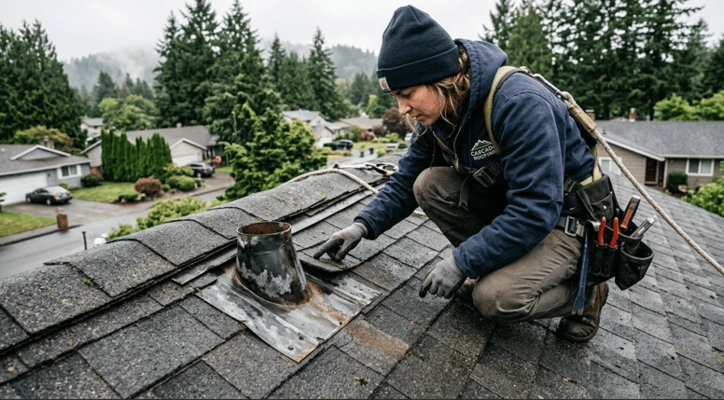
1. Cracked or Worn Pipe Boots
Pipe boots are the rubber collars that seal around the plumbing vent pipes sticking up through your roof. Most homes have two to four of them. They are one of the most frequent leak sources we repair in Sandy.
The rubber gasket on a standard boot breaks down with years of sun, cold, and freeze and thaw cycles. It shrinks, cracks, and pulls away from the pipe. Once that seal opens, rain runs down the outside of the pipe and into the attic.
What you notice inside: A small stain, often round, on a ceiling near a bathroom or kitchen. Sometimes you’ll see a drip that only shows up in heavy, sustained rain.
How we fix it: If the surrounding shingles and decking are sound, we replace the boot with a new flashing unit. On newer or long life roofs, we often recommend a boot rated to last as long as the shingles around it. This is one of the quickest and most affordable roof leak repairs there is. That’s one reason it pays to catch it early.
2. Failed Chimney Flashing
A chimney breaks the natural flow of water down your roof. Rain has to divert around it, and the metal flashing at its base does that work.
A properly flashed chimney uses step flashing woven into the shingles along the sides. Counterflashing is set into the mortar joints and laps over it. On wider chimneys, a small peaked structure called a cricket sits on the uphill side to split the water. When any piece of that system fails, water gets in.
In Sandy, we most often see:
- Counterflashing pulled loose from old mortar
- Caulk used as the only seal, which dries out and cracks within a few seasons
- Missing crickets that let water and fir needles pile up behind the chimney
- Cracked brick or a deteriorated chimney crown letting water soak down through the masonry itself
What you notice inside: Water stains on the ceiling or walls next to the fireplace, or damp framing around the chimney in the attic. You might also notice a musty smell near the hearth after long rains.
How we fix it: Real chimney leak repair means rebuilding the flashing correctly, not smearing more sealant on top. We reset or replace the step flashing and cut in new counterflashing. On chimneys wide enough to need one, we add a cricket.
3. Roof Valleys Clogged With Fir Needles and Debris
A valley is the channel where two roof slopes meet. It carries more water than any other part of your roof, because it drains two surfaces at once.
This is where Sandy’s tree cover really shows. Douglas fir needles, cones, and moss collect in valleys and form a wet dam. Water backs up behind that dam, spreads sideways, and works its way under the valley shingles or metal. Over time, the constant moisture also rots the underlayment and the decking beneath it.
What you notice inside: Stains along a ceiling line that follows the direction of a valley above. You might also find darkened or soft spots on the attic decking where two roof planes join.
How we fix it: We clear the debris, inspect the valley lining, and replace damaged shingles, underlayment, or valley metal as needed. For homes under heavy tree cover, keeping valleys clear during roof maintenance visits is the best prevention.
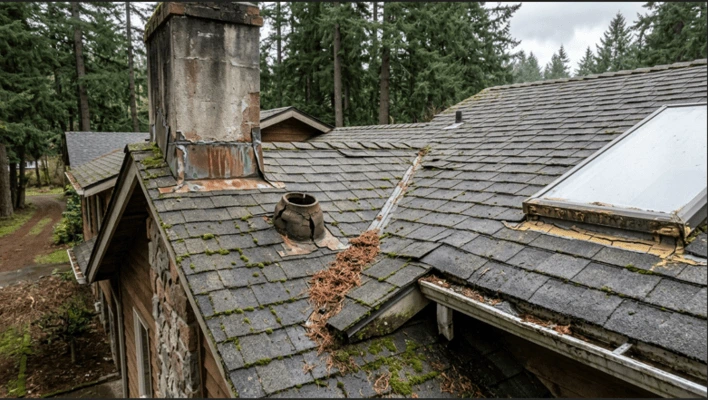
4. Moss Lifting Shingles and Holding Water
Moss is almost unavoidable on shaded Sandy roofs, and many homeowners treat it as a cosmetic problem. It isn’t.
Moss grows into the gaps between shingles and slowly pushes their edges up. It also acts like a sponge, keeping the roof surface wet long after the rain stops. Lifted shingle edges let wind driven rain slip underneath. The constant dampness speeds up granule loss and rot. We regularly find leaks under thick moss mats on roofs that otherwise have years of life left.
What you notice inside: Often nothing at first, which is what makes it tricky. By the time a stain appears, water has usually been soaking the underlayment for a while.
How we fix it: Safe moss removal uses gentle brushing and treatment, never high pressure washing, which strips shingle granules and can void warranties. After the moss is off, we check for lifted or cracked shingles and repair them. Zinc strips near the ridge and trimming overhanging branches help slow regrowth. If your roof is green, professional moss removal in Sandy is one of the best ways to prevent leaks.
5. Overflowing Gutters and Weak Roof Edge Details
Gutters are part of your roof’s drainage system. When they fill with needles and leaves, rain has nowhere to go. It spills over the front or backs up under the first row of shingles and into the fascia board.
Two roof edge details make this worse when they are missing or damaged:
- Drip edge: A metal strip at the eave that guides water into the gutter instead of letting it curl back onto the wood.
- Kickout flashing: A small bent piece of metal where a roof edge meets a sidewall. It directs water into the gutter instead of down the inside of the wall. When it is missing, water can rot the siding and wall framing for years before anyone notices.
In colder snaps, clogged gutters also help ice dams form along the eaves. Melting snow refreezes at the cold roof edge, and the water behind it backs up under the shingles. Homes higher up the Mt. Hood corridor see this more often, but Sandy gets its share during winter cold spells.
What you notice inside: Stains along the top of exterior walls, peeling paint near the ceiling line, or damp spots below a spot where the roof meets a wall.
How we fix it: Regular gutter cleaning, repairing rotted fascia, adding drip edge, and installing kickout flashing where it is missing. For homes that battle ice, we also check attic insulation and ventilation.
6. Worn Skylight Flashing and Seals
Skylights bring welcome light into our gray winters, but every skylight is a large opening cut into your roof. It depends on flashing and seals to stay watertight.
Most skylight leaks we find are not caused by the glass. They come from flashing that was installed poorly, from aged seals around the frame, or from debris packed against the uphill side. On older units, the frame gaskets simply wear out. Condensation can also drip from the inside of a skylight and be mistaken for a leak, so we always check both.
What you notice inside: Water at the corners of the skylight well, stained drywall around the opening, or drips that appear only during heavy, blowing rain.
How we fix it: Depending on the age of the unit, we reflash it, replace the seals, or recommend replacing the skylight. If you are already planning a roof replacement, that is the ideal time to replace an older skylight.
7. Wind Damaged, Missing, or Aging Shingles
Sandy sits in the path of strong east winds that pour out of the Columbia River Gorge in winter. Those gusts, along with falling fir limbs and the occasional ice storm, can crease, lift, or tear off shingles. A single creased shingle may look fine from the ground but no longer lies flat or seals properly.
Age plays a part too. Asphalt shingles in our wet climate tend to wear out sooner than their warranty numbers suggest. As they lose granules, they curl, crack, and stop shedding water the way they should.
What you notice inside: A new stain after a windstorm, or several stains appearing on different parts of the house. Several stains at once usually points to a roof that is wearing out overall.
How we fix it: We replace damaged shingles and check the underlayment beneath them. We also make sure the new pieces are properly sealed. When damage is widespread, or the roof is near the end of its life, we give you an honest comparison of repair versus roof replacement so you can decide.
Bonus: The “Leak” That Isn’t a Leak
Some of the calls we get about roof leaks turn out to be attic condensation. Warm, moist air from inside the house rises into a cold attic in winter. It condenses on the underside of the roof deck and drips onto the insulation.
The clues are frost or droplets on nails poking through the decking, and damp spots spread across the whole attic instead of in one place. You might also notice “leaks” on cold, dry days rather than during rain. The fix is better ventilation and air sealing, not roof repair. That’s why a thorough inspection matters before any money is spent.

Quick Guide: Match the Symptom to the Likely Source
| What You See Inside | Most Likely Roof Source |
|---|---|
| Round stain near a bathroom or kitchen | Cracked pipe boot |
| Damp wall or ceiling beside the fireplace | Chimney flashing or crown |
| Stain following a diagonal line across the ceiling | Clogged or damaged valley |
| Stains along the top of an exterior wall | Gutters, drip edge, or kickout flashing |
| Water at the corners of a skylight well | Skylight flashing or seals |
| New stain right after a windstorm | Lifted or missing shingles |
| Damp insulation everywhere on cold, dry days | Attic condensation |
Use this table as a starting point, not a final answer. Water travels, so a professional inspection is the only way to confirm the source.
What to Do Tonight If Your Roof Is Leaking
If water is coming in right now, a few steps can limit the damage until a roofer arrives:
- Move furniture and electronics out of the way and catch the drip with a bucket or tub.
- If a ceiling spot is bulging with water, carefully poke a small hole in the center to let it drain into a bucket. This relieves pressure and prevents a larger section from collapsing.
- Check the attic with a flashlight, if you can do so safely, and note where the water is appearing.
- Take photos of the interior damage for your records and any possible insurance claim.
- Stay off the roof. Wet shingles and moss are extremely slippery, especially on steep Sandy roofs.
- Call a local roofer for leak repair or emergency tarping.
Frequently Asked Questions About Roof Leaks in Sandy, OR
What is the most common cause of roof leaks?
The most common cause of roof leaks is failed flashing or seals around roof penetrations. Pipe boots, chimneys, and skylights all fall into this group. Open areas of healthy shingles rarely leak on their own.
Why does my roof only leak during heavy rain?
A roof that leaks only in heavy or wind driven rain usually has a small flashing gap, a lifted shingle, or a partly clogged valley. Light rain drains normally. Heavy rain overwhelms the weak spot or pushes water sideways under it.
Can moss really cause a roof leak?
Yes. Moss lifts shingle edges and holds water against the roof for long periods. Both of those let rain work its way under the shingles and into the underlayment and decking.
How much does roof leak repair cost in Sandy, OR?
The cost depends on the source and on whether water has damaged the decking below. Replacing a pipe boot or resealing a small flashing area is usually a modest, targeted repair. Rotted decking, chimney flashing rebuilds, or widespread shingle damage cost more. A free inspection gives you an accurate number.
Should I repair my roof leak or replace the whole roof?
Repair makes sense when the leak comes from one isolated spot and the roof still has good life left. Replacement is usually the smarter choice when leaks appear in several places, or when shingles are curling and losing granules. It also makes sense when the roof is near the end of its expected lifespan.
How can I prevent roof leaks in Sandy?
Keep gutters and valleys clear of fir needles, and treat moss before it lifts shingles. Have your roof inspected each fall before the heavy rains start, and again after major windstorms or ice storms.
Get Roof Leak Repair From a Trusted Roofing Contractor in Sandy, OR
A small leak today can become rotted decking, mold, and a much bigger bill by spring. At Red Stag Roofing, we trace leaks to their true source and fix them properly, not just patch the stain. We are licensed and insured, with more than 30 years of roofing experience. We serve homeowners in Sandy, Gresham, Boring, Estacada, Clackamas and nearby communities with roof repair, roof replacement, moss removal, and gutter cleaning.
Call us at +1 (503) 926 1835 or request your free estimate today. We’ll find the leak and give you honest options for fixing it.
One Response